


Walking a cat on a lead or harness has gone from a curiosity to a growing trend. More cat owners than ever are taking their feline companions outside for a supervised walk, and the appeal is easy to understand. For the right cat, leash walking can open up a whole new level of enrichment: fresh air, new smells, and the kind of sensory experience that indoor life simply cannot replicate.
But before you invest in a cat harness and head for the great outdoors, there is one important question to answer. Is your cat actually suited to being walked on a lead? Because unlike dogs, cats don't tend to take naturally to a harness and leash without the right preparation, and the experience can go very differently depending on the individual cat.
Is Walking a Cat on a Lead Right for Your Cat?
The most important thing to understand about leash walking is that it depends on the cat. There is no universal answer, and cats need to feel in control of their environment in a way that dogs simply do not. A cat on a lead cannot flee from something that frightens them, whether a passing dog, a sudden noise, or an unfamiliar person, and if they find the experience stressful, being on a harness can cause real anxiety, especially for long periods.
Many cats, particularly those with a nervous or anxious temperament, will feel stressed by being restrained. Cats feel safest in familiar surroundings where they can make their own choices. Taking them somewhere they have never been before could be overwhelming in the early stages, and some cats will want to run away the moment anything unsettles them.
The cats that tend to take best to walking on a harness and lead are confident, curious, and not easily startled. You will often find them perched at windows watching the outside world, hovering near doors, or making clear they want to explore. They respond well to treats, adapt to new experiences without too much fuss, and show a genuine interest in the great outdoors. Kittens are generally quicker to adapt, but adult cats can become leash trained with consistent, patient effort.
If you are not sure whether your cat is a good candidate, pay attention to how they behave around new objects and changes at home. That will tell you more than any checklist.
The Benefits of Walking Your Cat
For the right cat, the benefits are genuine. Walking a cat on a harness and lead allows them to explore the outdoors safely while you keep a close eye on them. Cats are natural hunters and explorers, and the sights, sounds, and smells of nature give their minds something to work with that indoor toys and window seats alone cannot fully replicate.
Regular walks can help your cat burn off energy, reduce boredom, and enrich their daily routine in a way that makes a real difference to their mood and behaviour indoors. It is also a wonderful opportunity for bonding. Many cat owners who walk their feline friends report a noticeable improvement in their cat's general wellbeing, with calmer behaviour at home and more willingness to engage with toys and play after a walk outside.
What You Will Need Before You Start
Getting the right equipment from the beginning makes everything easier and safer for both of you.
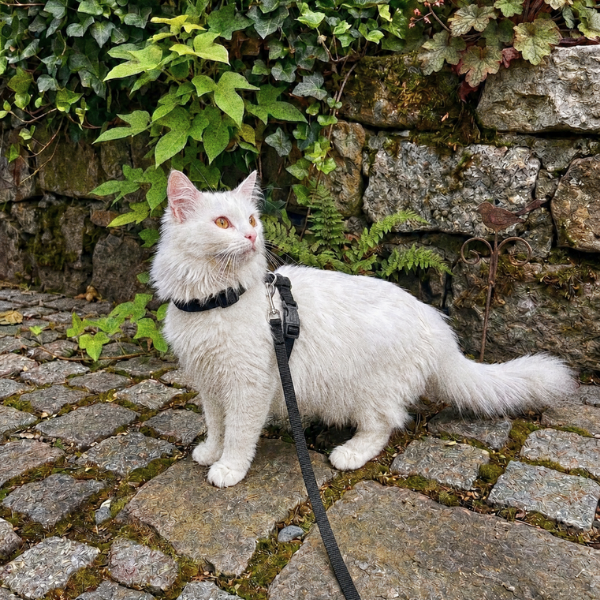
A harness specifically made for cats. Never attach a lead directly to a collar and try to walk your cat. Cats don't tolerate it, and it is genuinely dangerous. A cat can slip out of a collar with very little effort, and any pressure against the neck can cause injury. A cat harness made for cats distributes pressure evenly across the chest and shoulders, making it far safer and more comfortable for your cat. The fit should be snug without being tight: one finger should slide comfortably underneath the straps, but not two. For walks in lower light, a reflective cat harness vest helps keep your cat visible to others.
A light, long lead. Cats love to wander and investigate, so a short lead will feel immediately restrictive. A retractable cat lead gives your cat room to explore at their own pace while keeping you in control when needed. Cat leads should be noticeably lighter than dog leads, which can add too much weight for a cat to move comfortably.
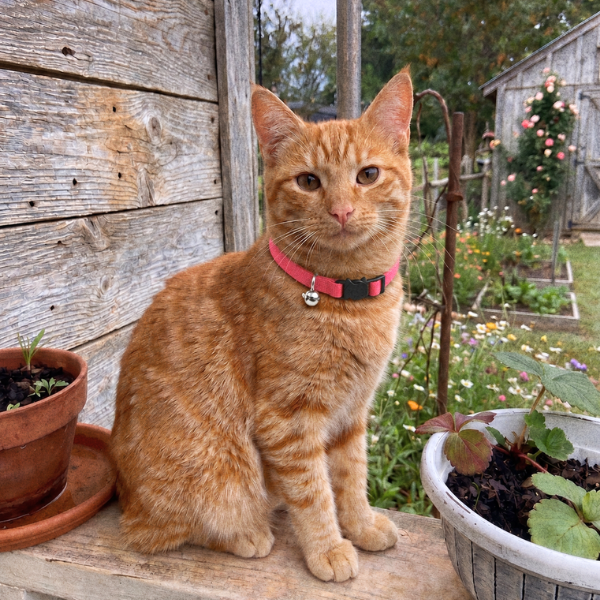
A breakaway collar with an ID tag. Even a well-fitted harness can be escaped if a cat panics. A breakaway collar worn alongside the harness, fitted with a clearly engraved ID tag, means that if your cat does escape from their harness and become lost, whoever finds them can contact you straight away. If your cat is microchipped, make sure their microchip details are fully up to date before taking them outside. It is also a good idea to speak to your vet before you begin outdoor walks, particularly if your cat has not been outside before.
A backpack or soft carrier. Particularly in the early stages, having a familiar enclosed space to offer your cat is genuinely useful. If they get overwhelmed and want to retreat, a carrier gives them somewhere safe to decompress rather than panicking on the lead.
Treats. High-value treats are your main training tool throughout the whole process. Keep them small, easy to eat quickly, and something your cat genuinely loves.
How to Train Your Cat to Walk on a Lead
Taking the time to properly train your cat to walk on a harness and lead is what determines whether the experience is a positive one. Rushing is the most common mistake first-time cat walkers make.
Start by leaving the harness somewhere your cat can investigate it independently, near their bed or beside their food bowl. Let them sniff it, paw at it, or ignore it entirely. The goal is for it to become a familiar object rather than an alarming one.
Once it has been around for a few days, put the harness on your cat loosely just before their evening meal, using the food as a distraction. Many cats react strangely the first few times: freezing, rolling on the floor, or walking awkwardly. This is completely normal. Leave it on for just a few minutes, reward with a treat, and remove it. Repeat over several days until your cat settles and moves around normally while wearing it.
Once your cat is comfortable, fit the harness properly and attach the lead. Let your cat drag the lead around the house so they get used to the feeling and weight of it. After a few sessions, pick up the lead yourself and follow your cat around indoors with it completely loose. You are not guiding them at this stage: you are simply helping them get used to the sensation of being connected to something.
When they are relaxed indoors, try a secure garden or enclosed outdoor space close to home. Keep the first sessions short. Always let your cat lead, and never force them to keep walking if they want to turn back.
Your First Steps Outside
When your cat is comfortable wearing the harness and lead indoors and in a familiar garden, you can begin to introduce them to new environments, but move gradually.
Choose somewhere quiet to begin with. Busy roads, off-lead dogs, and heavy foot traffic are all worth avoiding in the early stages. Walk somewhere familiar where your cat can feel grounded, and only move to somewhere they have never been before once they are genuinely settled with the whole process. Going somewhere completely unfamiliar too soon could set back your progress significantly.
Keep a close eye on your cat's body language throughout. Flattened ears, a tucked tail, or attempts to crouch and hide are clear signs they have had enough. Always be ready to offer the carrier as a retreat or pick them up calmly if something unsettles them. Let them explore at their own pace, and follow wherever they lead.
Walking a Cat Is Very Different to Walking a Dog
It is worth setting expectations clearly before your first walk, particularly for dog owners who are new to cats. Walking a cat is very different to walking a dog, and many people are caught off guard by just how different the experience is.
Your cat will lead. You will follow. They will pause for several minutes to investigate a patch of ground. They will change direction without warning. They may sit down and simply refuse to move. None of this is a problem. It is exactly how leash-walking a cat is supposed to go. The point is not to cover ground or get from A to B. The point is to give your feline companion unstructured time outdoors to wander, sniff, and engage with the world at their own pace.
Some cats take to it quickly and begin running to the door at the sight of their harness and lead. Others take weeks before they seem truly settled. Both are fine. The process is the same: go slowly, keep it positive, and let your cat set the pace.
What If Your Cat Does Not Want to Walk?
Never force your cat to keep walking if they are clearly unhappy. If harness training causes ongoing distress rather than gradually settling down, it is much better for your cat to stop altogether than to push through. Some cats will never enjoy leash walking, and accepting that is the right thing to do.
There are plenty of other ways to enrich your cat's life and let them experience the smells of nature without the need to walk on a lead. A catio, an enclosed outdoor space attached to your home, is one of the best alternatives. It allows your cat to explore at their own pace while keeping them and local wildlife safe, all without needing to be on a lead or supervised every moment. Window perches, cat trees, and indoor enrichment activities can also go a long way towards keeping your feline friend mentally stimulated and content indoors.
The goal, whether walking on a lead or not, is to enrich your cat's life in a way that suits them. There is no single right answer for every cat, and the best approach is always the one your individual cat will actually enjoy.
Ready to Get Started?
.png)
If your cat is showing all the signs of being a natural adventure cat, getting the right gear makes all the difference to a safe and comfortable first experience. Browse our range of cat harnesses, leads, and collars and find everything you need to take your cat outdoors in confidence.